
Running a Dallas County Sex Offender Check
The official starting point is the Missouri Sex Offender Registry search. The Missouri State Highway Patrol updates it daily. A user must first accept the registry disclaimer, then may search a true name, alias, date of birth, tier, address type, street, city, ZIP code, or Dallas County. The state warns that the list is not a full criminal history and does not rate a person’s present risk.
The Dallas County Sheriff is the county registration official. Call the detention center at 417-345-2441 when a profile raises a compliance question or its address seems stale. The office is at 204 S. Poplar St., Buffalo, MO 65622. No official source publishes set registration-desk hours, an appointment rule, or a local fee, so a call before a visit is the sound step.
Dallas County Registration Reaches MSHP
A Dallas County resident who has a Missouri registration duty reports through the county’s chief law-enforcement official. The Sheriff records required changes and verification activity, while MSHP manages the public statewide database. This split matters. A question about a Dallas County check-in belongs with the Sheriff, but a technical problem with the state registry belongs with MSHP at 1-888-767-6747 or 573-526-6348.
The public registry may include people required to register because of more than a sex-offense conviction. MSHP notes that kidnapping, felonious restraint, or child-abuse registration categories may not all appear in the same way. The public view is thus a safety tool, not a substitute for the filed court record or a complete repository history.
Searching the Missouri Sex Offender Registry
Begin with the fewest reliable fields. A Dallas County filter can find local registrations, while a name search can follow a person across Missouri counties. If the name is common, add the first name or date of birth. Do not assume that an empty city search means no record exists because an address may be outside city limits, listed under another address type, or unable to geocode.
- Open the active MSHP search and accept the legal disclaimer.
- Enter at least one criterion, such as last name, Dallas County, city, ZIP code, or a radius address.
- Compare aliases, birth information, photo, address type, tier, and status before selecting a profile.
- Read the update and verification fields, then contact the registering official if current compliance is in doubt.
| Field | Type | Required | Options or Format |
|---|---|---|---|
| Offender Name | Text | One criterion overall | True and alias names; first and last fields up to 60 characters |
| Date of Birth | Month, day, year | No | Separate month and day lists plus a year field |
| Predator or Tier | Dropdown | No | Predator; Level 1, 2, or 3 |
| Address Type | Dropdown | No | Home, work, school, temporary, incarcerated, out of state, or all |
| Place | Text and dropdowns | No | Street, city, Dallas County, state, and ZIP code |
| Radius Search | Address and distance | No | 500 to 4,000 feet, or 1, 2, 5, 10, or 15 miles |
Dallas County Map Pins Need Context
The radius tool searches registered home, work, and school addresses around a point. Its map offers several display styles and distances from 500 feet through 15 miles. Yet a pin is not proof that a person is at that spot when the map loads. The address may have been supplied by the registrant, an update may still be pending, or a valid place may fail the map’s geocoding step.
Read the address type and update date beside the map. “Pending Registration” means a move or other change was reported but registration with the new county official is not complete. “Absconder” means the person’s location is unknown. “Moved Out of State” and “Incarcerated” also describe why a Dallas County result may not show a current home address.
Note: Treat a mapped address as a lead for safety planning, then use the profile status and registering office to verify its meaning.
What a Registry Profile Shows
A public profile joins identity, registration, and offense data in one view. That does not make it a full rap sheet. It generally describes the qualifying offense and current registry duties, while a Missouri court file may hold the plea, motions, judgment, and sentence. Users who need that larger context can search the official court file rather than infer it from one registry line.
| Name & Aliases | Registered name plus published alternate names used to help distinguish identities |
|---|---|
| Photo & Description | Current published photo, age or birth date, sex, race, height, weight, hair, eyes, and visible marks when authorized |
| Registered Addresses | Home and other authorized work, school, temporary, incarceration, or out-of-state entries |
| Offense | Qualifying offense, jurisdiction, conviction date, and statutory citation |
| Tier | Missouri offense classification that sets duration and verification duties, not an MSHP risk score |
| Status | Compliant, non-compliant, pending registration, absconder, incarcerated, or moved out of state |
| Update Data | Registering agency and the latest displayed verification or change information |
Dallas County Address Alerts
MSHP offers a free notification account for those who want more than a one-time Dallas County search. The account may watch up to five physical addresses with a radius from 500 feet through five miles. It can also follow a specific public profile and send notice when that profile’s address changes. Registration uses an email address and password, followed by a confirmation link that must be used within 48 hours.
The MSHP registry email-alert service shows the official sign-up path.
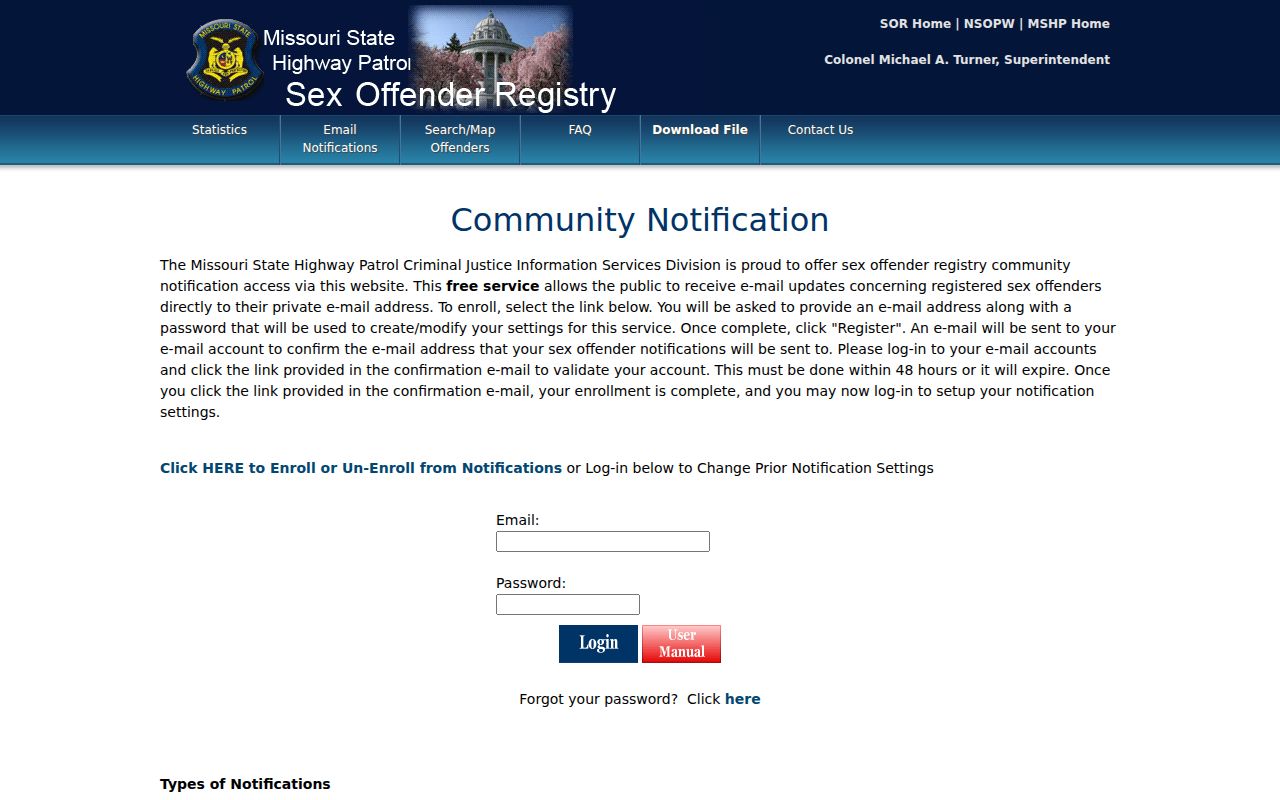
This alert screen adds a watch function to the daily registry, but each notice still requires a fresh look at the profile and its status.
Registration Requirements and Levels in Missouri
Missouri uses three statutory tiers, with duties tied to offense class and other legal facts. The table applies the expanded protocol confirmed for Dallas County, while RSMo §589.400 supplies the registration framework. A tier is not a finding that one listed person is more likely to offend than another.
The official registration statute shows how Missouri defines the duty.
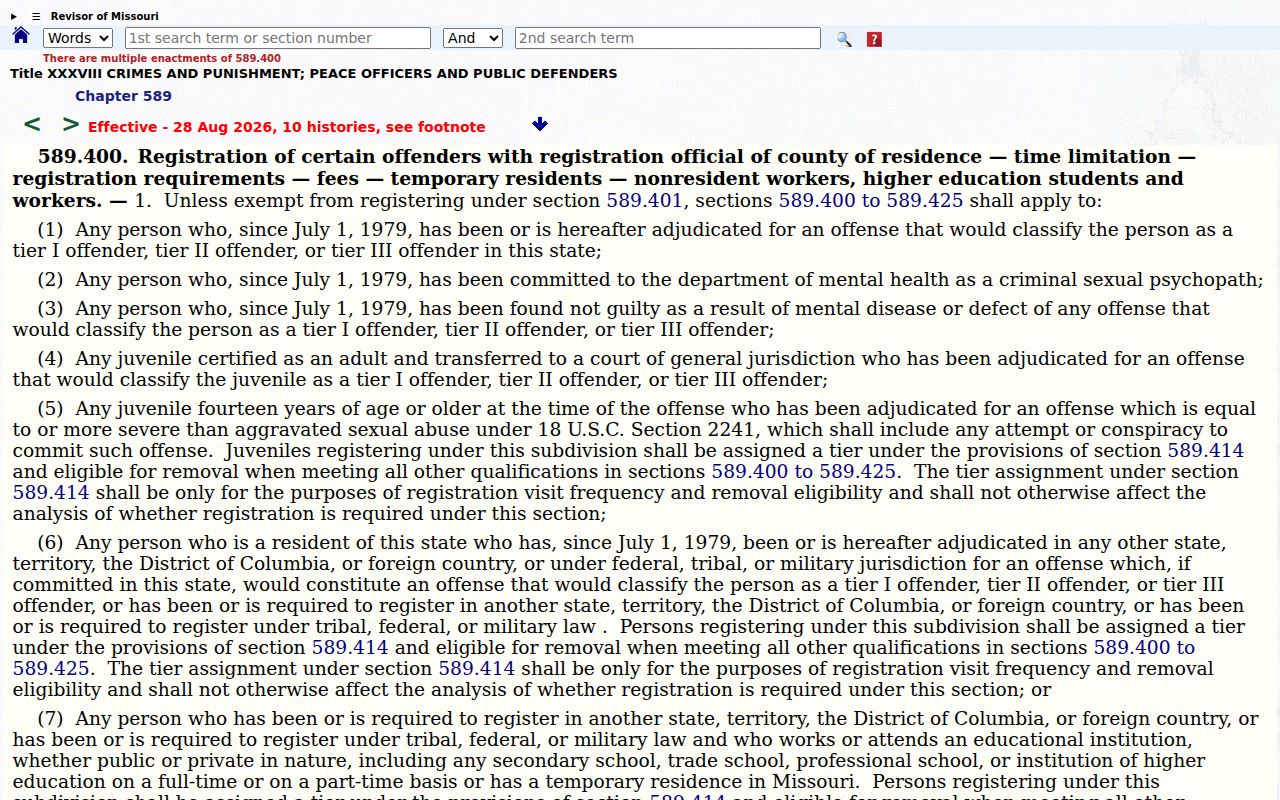
That legal text controls when the duty applies, while the profile reports the tier assigned within the state system.
| Missouri Tier | Duration | In-Person Verification |
|---|---|---|
| Tier I | 15 years; an eligible clean-record reduction may remove five years after ten clean years | Annually in the birth month |
| Tier II | 25 years | Semiannually, in the birth month and six months later |
| Tier III | Life; qualifying juvenile-adjudication relief may be available after 25 clean years | Every 90 days |
Dallas County Duration Is Not Automatic
Time passing alone does not remove a Dallas County profile. RSMo §589.404 provides the duration and petition route for eligible cases, but only after every statutory condition and minimum period is met. Juvenile adjudications have special rules, so the adult tier table should not be applied to them by guess.
The official duration statute records those limits and the available removal route.
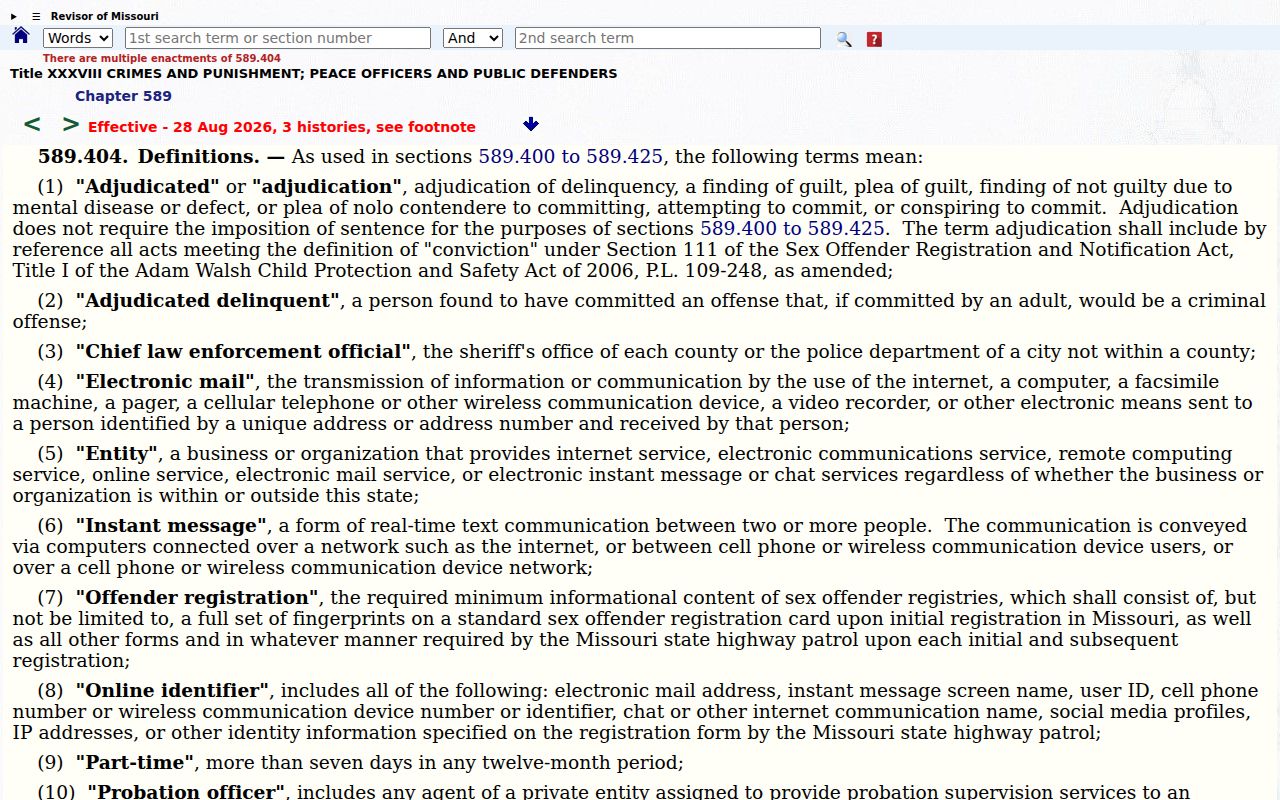
For a real Dallas County case, the conviction date, offense, tier, and clean-record period must be checked against the current law.
Report Dallas County Noncompliance
Do not confront a person whose profile reads non-compliant, pending, or absconder. Report suspected noncompliance to the Dallas County Sheriff at 417-345-2441. Use 911 only for an emergency. MSHP may also help with registry questions during its published weekday hours, but the Sheriff is the local official who receives Dallas County registration and change information.
RSMo §589.425 sets the offense for failure to register.
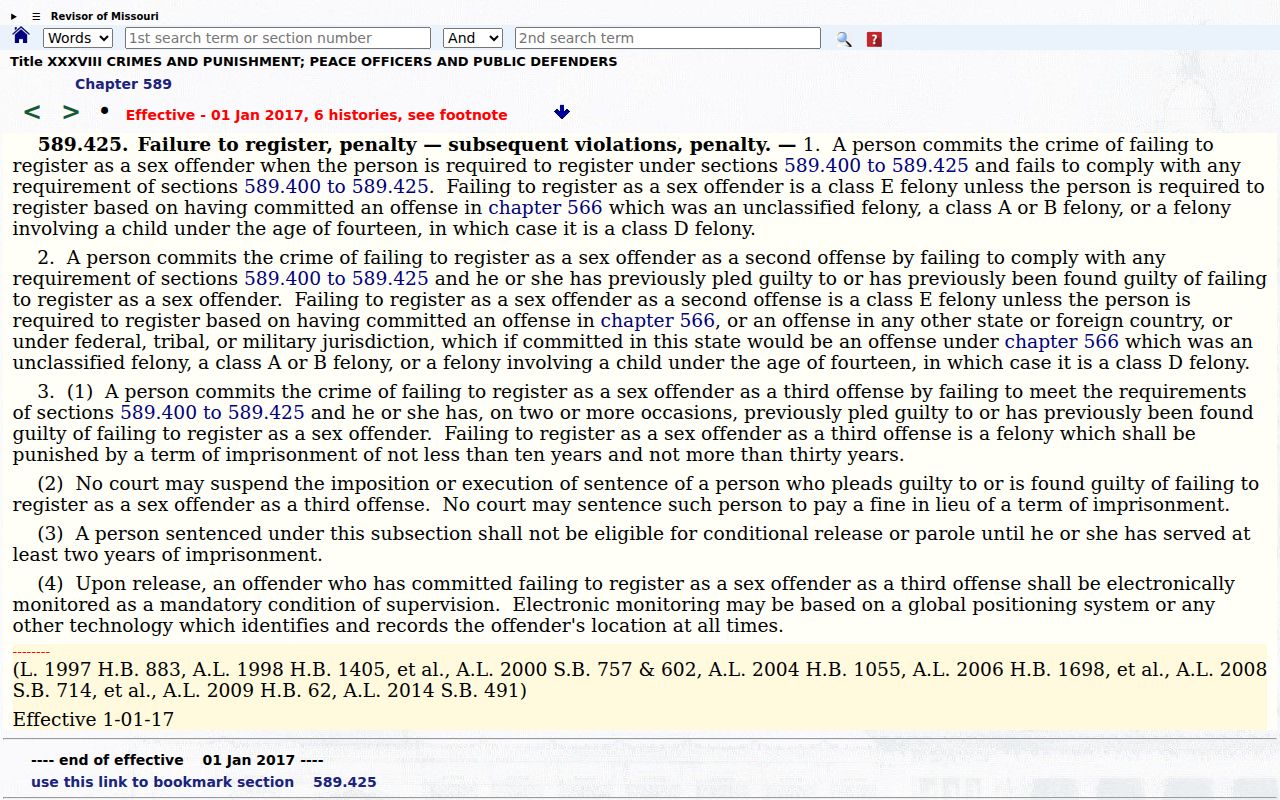
The statute explains why a status concern belongs with law enforcement, not with a private confrontation or social-media claim.
Dallas County and National Registry Searches
The Missouri search is best for Dallas County details because it exposes state fields, address types, tiers, radius options, and local registration status. The National Sex Offender Public Website adds participating jurisdictions when a name or safety check crosses Missouri lines. It is useful for a move or travel question, but it does not replace Missouri’s profile notes or the Dallas County Sheriff’s local role.
A registry result should never be treated as a complete criminal history. The qualifying offense does not show every case event, dismissed count, or court filing. The two tools also update through different source systems, so a careful user checks the source jurisdiction when results seem to differ.
Dallas County Restriction Questions
Registration, residence limits, and criminal charges are separate legal issues. The Missouri residence and conduct restriction statute is the primary text for the limits it covers.
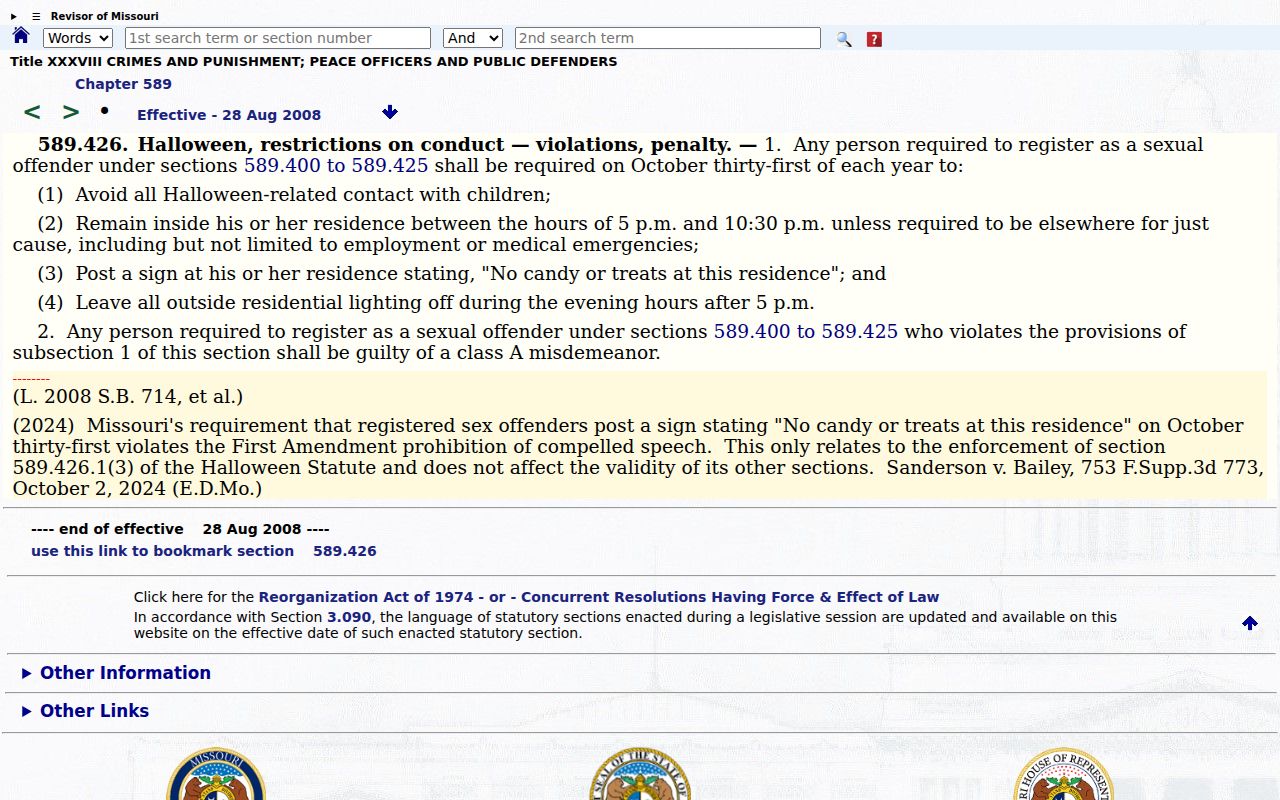
The statute, not a map radius chosen by a registry user, determines which restriction applies to a Dallas County registrant.
The Missouri State Highway Patrol provides the state agency route for registry questions and statewide program information.
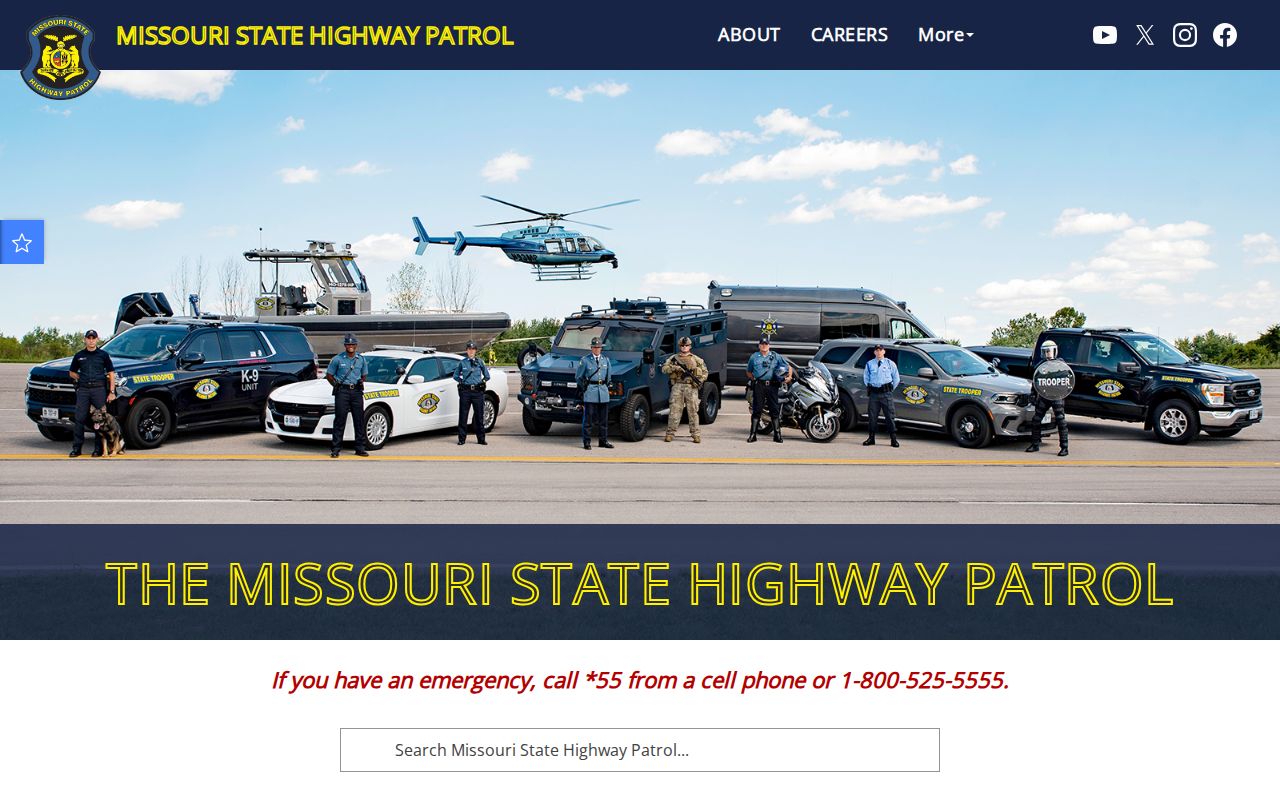
MSHP manages the public system, while the Dallas County Sheriff remains the local registration official.
A person facing a criminal case should use the court and counsel channels rather than treat a public profile as legal advice. The Missouri State Public Defender is the official state defense agency.
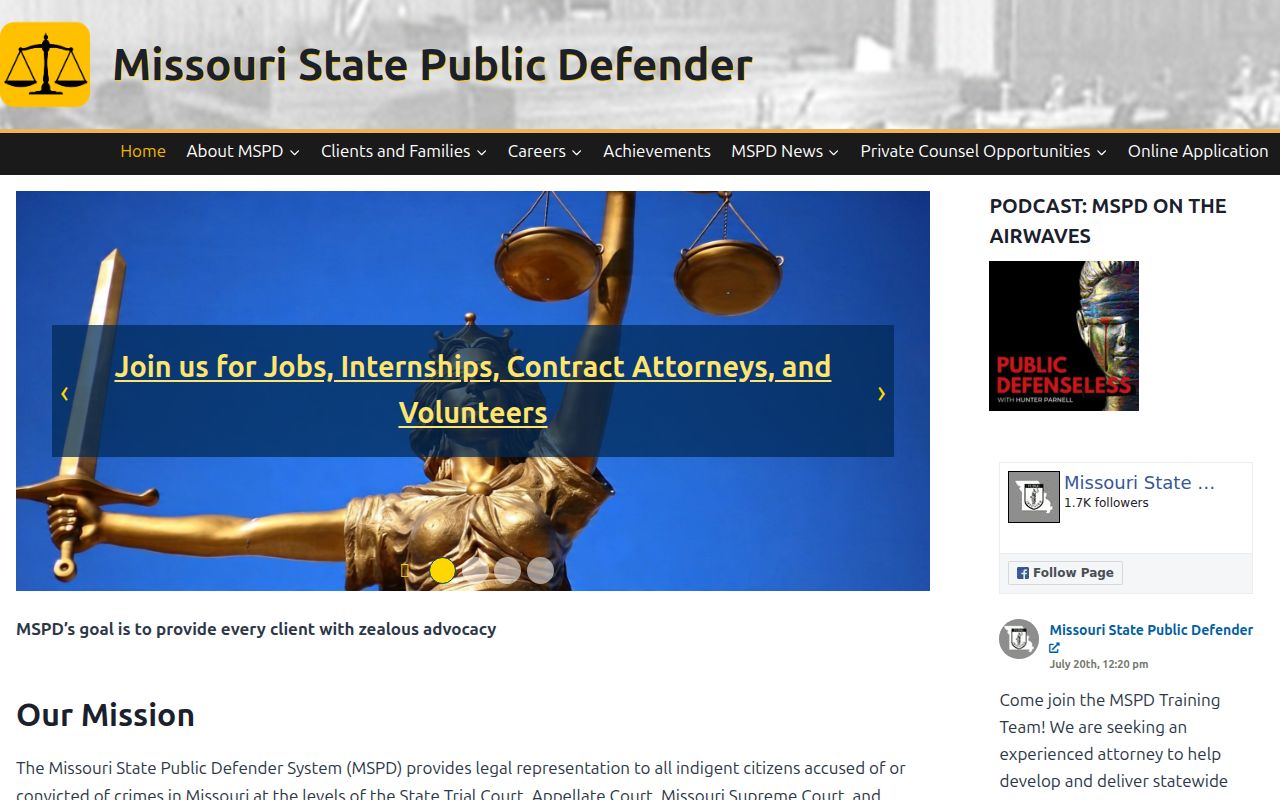
That official resource serves defendants in qualifying cases; it does not act as the registry custodian or alter a Dallas County profile.
Lawful Use and Community Notification
Registry information supports personal safety and community awareness. It does not authorize threats, intimidation, harassment, trespass, or another crime. A Dallas County check should stay focused on the official profile, its last update, and the proper report channel. Never publish an assumption that a mapped address proves a person’s present location.
Missouri’s limits apply from the governing statute and a person’s legal status, not from a neighbor’s reading of a map. Suspected failure to register should be reported to the Sheriff.
Use Registry Information Lawfully: Misusing registry data to threaten, intimidate, harass, or commit a crime is unlawful. Report concerns to the Dallas County Sheriff; failure to register is separately prosecuted under RSMo §589.425.